_converted%5B1%5D.avif)
For energy and utilities providers
If the grid stays local, your data should too
Manage credentials and sensitive operational files under full European jurisdiction – with zero-knowledge architecture, Swiss hosting, and the audit trail NIS2 demands.

The reality
Gaps in data security don't just create compliance risk. They breach client trust.
Energy and utilities providers manage some of the most sensitive operational data in existence: grid access credentials, maintenance logs, contractor permissions, regulatory reports. A compromised credential or an uncontrolled file share doesn't just create an audit finding; it can disrupt service continuity for thousands of people.

Critical operational data exposed to foreign jurisdiction
Many utilities providers still rely on US-based cloud services for credential and file management. Under the U.S. CLOUD Act, operational data, including grid access credentials and maintenance documentation, can be subject to foreign government access, regardless of where it's physically stored. Under NIS2 obligations, this isnʼt just a compliance gap. It's a compliance liability.

Contractor access that's hard to control and harder to audit
Field technicians, maintenance contractors, and third-party vendors all need access to operational systems often urgently, often temporarily. When that access isn't centrally governed and audited, a single shared credential or misrouted file becomes an entry point. And in critical infrastructure, entry points have consequences.

NIS2 enforcement ishere – and auditorsare checking
NIS2 is no longer upcoming; enforcement has started. For utility providers, this means documented access controls, verifiable data handling, and demonstrable incident response capabilities. Auditors aren't checking policies anymore. They're checking controls, and the organizations that can show sovereign, auditable control will have a measurable compliance advantage.

Built to meet the standards critical systems operate under
The right modules for utilities providers: Sovereign control startswith credentials and files
Most access failures in critical infrastructure start with uncontrolled credentials or mismanaged file permissions. SecureSafe addresses both – on the same Swiss-hosted infrastructure, with the same zero knowledge architecture, and without adding complexity to already stretched IT teams.
Pass
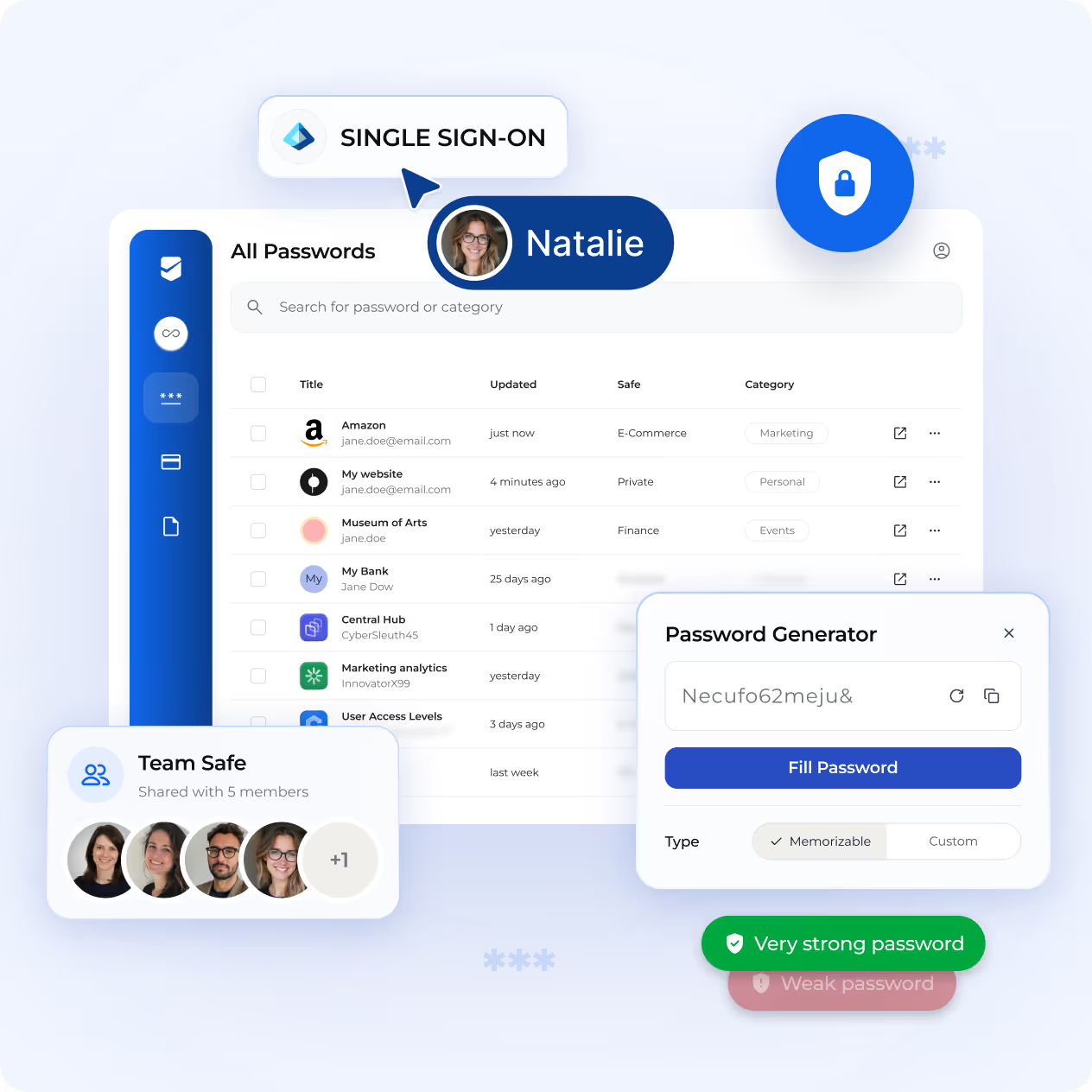
Sovereign credential management for complex, contractor-heavy environments
Give your team the freedom to focus on what they do best: keeping critical infrastructure running, not managing access requests. With SecureSafe, you manage credentials centrally across internal teams, contractors, and field technicians – without any credential ever leaving European jurisdiction.
- Contractor and field team access management
- Share access without exposing passwords
- Keep full control, even as teams and roles change
Files
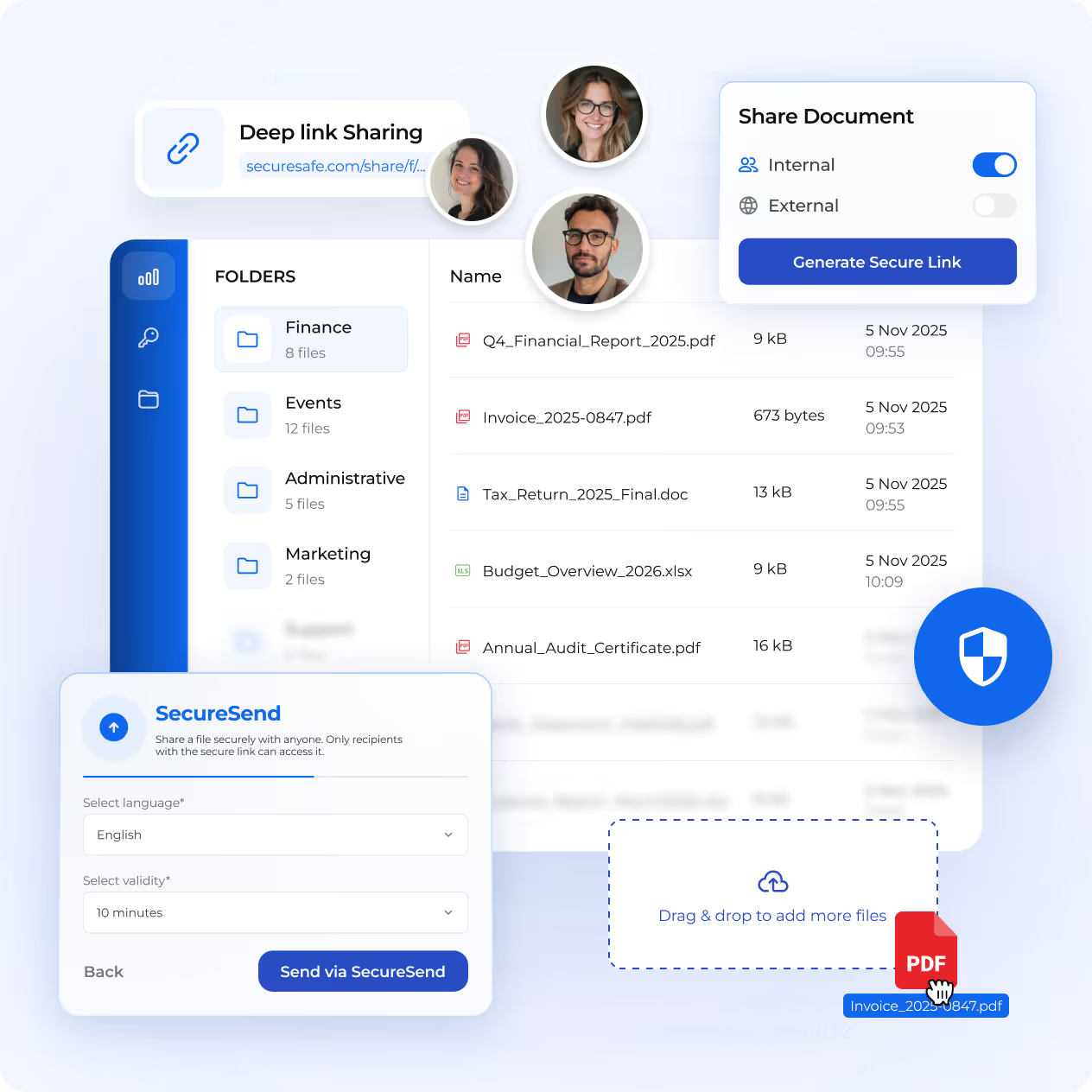
One secure place for the operational files your infrastructure depends on
Store grid access documentation, maintenance logs, vendor contracts, and regulatory reports in encrypted, permission-controlled safes – under full European jurisdiction, accessible only to authorised personnel, and invisible to everyone else, including us.
- Protect sensitive documents with encrypted storage
- Control access clearly across teams and roles
- Share files securely in teams without losing oversight
Exchange
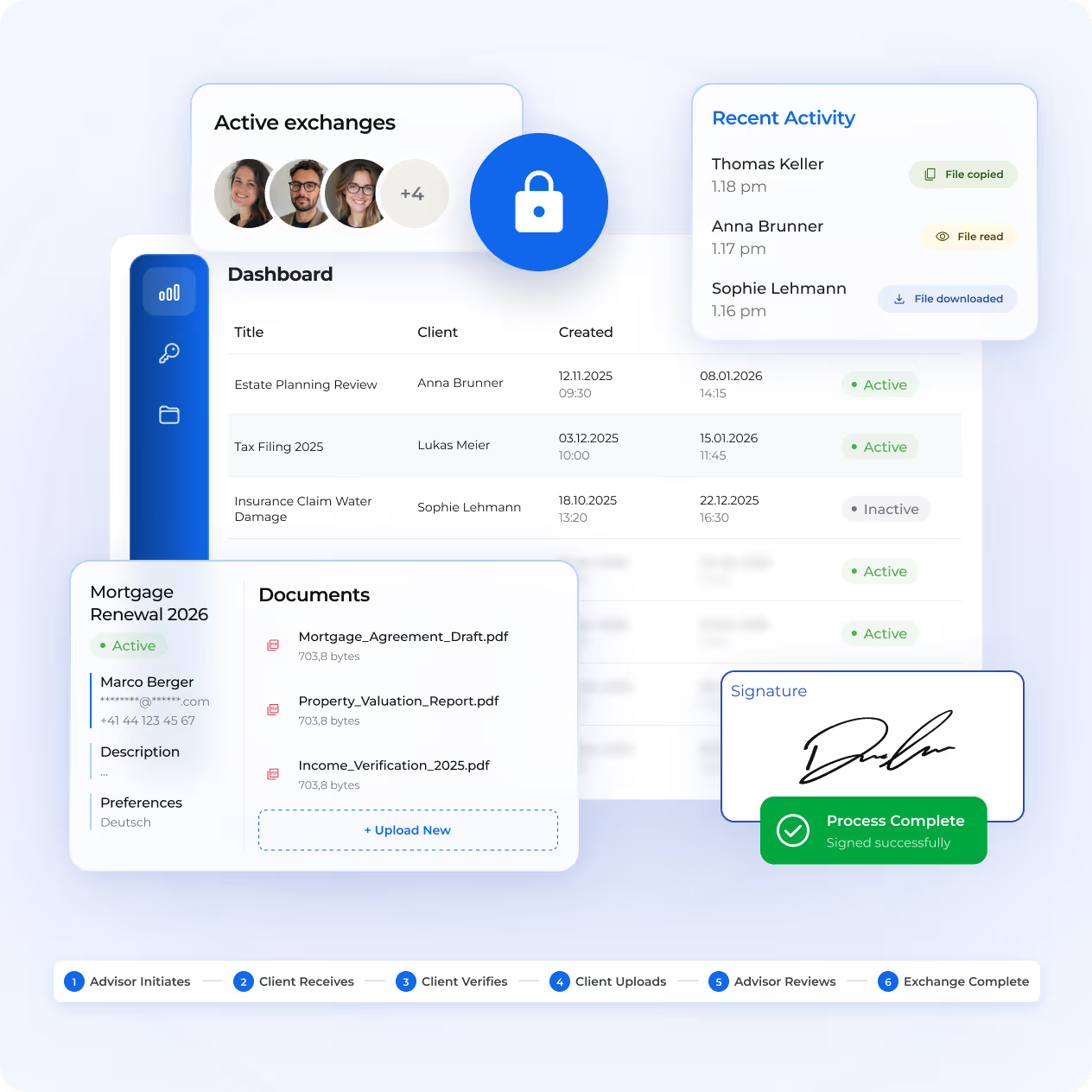
Replace email with secure matter file exchange
Send and receive contracts, due diligence files, litigation bundles, and privileged correspondence with clients, opposing counsel, and third parties – with automatic audit trails, and no account creation required on the other sideʼs end.
- Client document collection and exchange
- Due diligence file sharing
- Secure file exchange with opposing counsel
Postbox
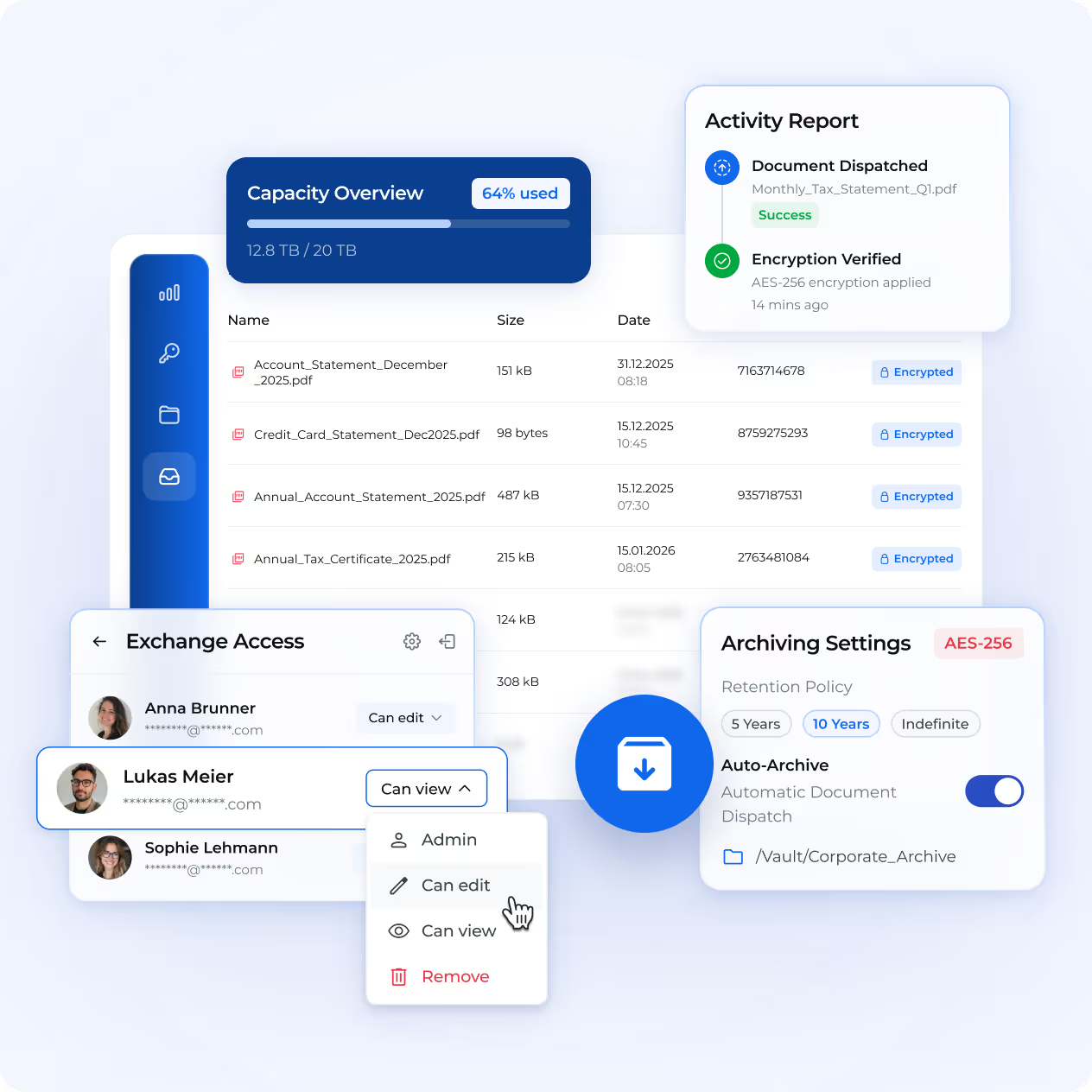
Replace paper-based document delivery with a legally compliant digital alternative
Send mandate documents at scale without paper, postage, or compliance risk. Once delivered, documents belong to the client and can't be altered.
- Annual accounts delivery
- Tax assessment dispatch
- Mandate correspondence archive


"Companies need clear guidelines, a vision and mission in order to make targeted progress in the area of sustainability. Ultimately, however, it is the people behind the efforts that really make the difference – their day-to-day contributions make sustainable change possible."

Getting started is simpler than you think
From first conversation to full deployment – we're with you every step.
No lengthy procurement process. No complicated setup: Getting started with SecureSafe is a straightforward process, and our team is with you at every step.



First, we listen – discovery call
Before anything else, we take the time to understand your organization: your workflows, your requirements, and what you're looking to solve. In this short, no-commitment call, we’ll help you understand whether SecureSafe is the right fit.
See it in action – demo call
Your dedicated contact will walk you through the SecureSafe module that fits your needs, show you the features relevant to your use case, and answer any questions you might have.
Getting you live – implementation & onboarding
Once you're ready to proceed, our team moves quickly. Implementation is structured, supported, and designed to minimize disruption to your existing workflows.
Security
Certified. Sovereign. Built for infrastructure that can't go down.


Critical infrastructure operators need security they can verify, document, and defend under audit. SecureSafe is ISO 27001 certified, Swiss-hosted, and zero-knowledge by architecture meaning even we can't access your data. If your security assessment requires documentation, it's ready.